




CE marking is a legal requirement for machinery placed on the market within the European Union and the European Economic Area. It demonstrates that the machine complies with the applicable safety, health, and environmental requirements and is a fundamental part of modern machine safety. For every manufacturer, system integrator, or company assembling multiple machines into a production line, CE marking represents a clear legal responsibility.
For One Automation, CE marking is about more than regulatory compliance. It is about creating safe, sustainable, and reliable long-term solutions for the manufacturing industry.
The Machinery Directive – The Legal Foundation for CE Marking
The Machinery Directive is the key EU regulation governing the safety requirements that machinery must meet. It defines the essential health and safety requirements applicable to machinery and safety components and forms the basis for national regulations in EU member states.
Once a machine complies with the requirements of the Machinery Directive, it may be CE marked and placed on the EU market. This applies to both individual machines and groups of machines that together form an integrated production line.
CE Marking of Machinery – Responsibilities, Scope, and Application
CE marking of machinery means that the manufacturer—or the party responsible for the assembly or modification of the machine—declares that it complies with the requirements of the Machinery Directive. This also applies when re-certifying modified machinery with a new CE marking or when integrating multiple machines into a new, functional production line.
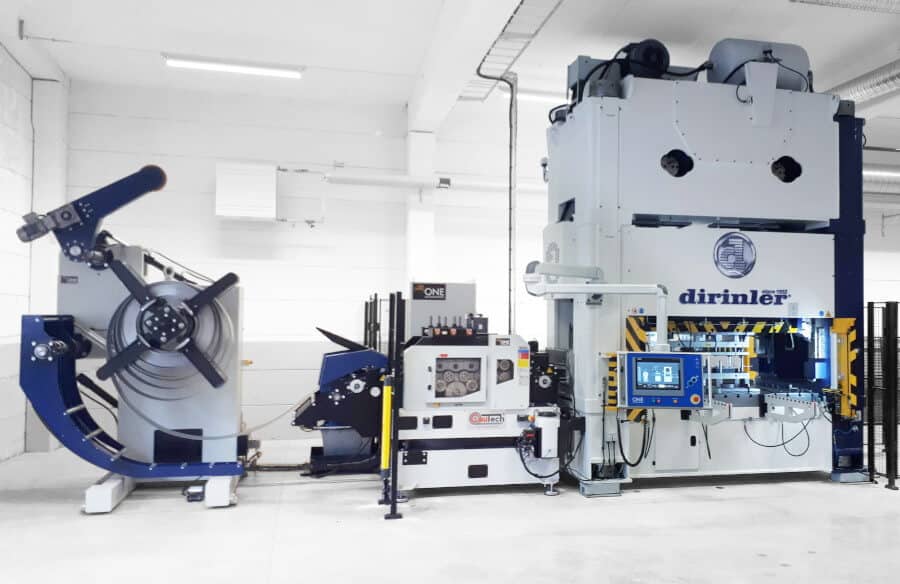
For integrated production lines, it is essential to carefully assess the interfaces between individual machines. The evaluation should cover both each machine separately and the system as a whole, with particular attention to the risks that may arise from the interaction between the different systems.
Declaration of Conformity – Demonstrating Compliance with the Requirements
CE marking is based on the manufacturer issuing a Declaration of Conformity. This document confirms that the machine complies with all applicable requirements and that the Machinery Directive, along with any other relevant regulations, has been fulfilled.
A CE-marked machine demonstrates that it complies with the requirements of the Machinery Directive and meets the applicable safety standards. The Declaration of Conformity serves as a legal document that must be available for inspection by the relevant authorities.
Machine Safety – Risk Assessment as the Foundation for Safe Solutions
Machine safety is at the core of the entire CE marking process. A structured and documented risk assessment is required to identify hazards, evaluate risks, and ensure that appropriate safety measures are implemented.
The essential health and safety requirements are designed to protect people from injury and ensure that the machine remains safe throughout its entire lifecycle—from installation and commissioning to operation and maintenance.
CE Marking in Practice – What the Marking Actually Means
The CE marking is affixed to the machine and indicates that the manufacturer accepts responsibility for ensuring that it complies with all applicable EU requirements. CE marking is an active commitment—not merely an administrative formality.
The Machinery Directive and Technical Documentation
The requirements of the Machinery Directive cover the machine’s design, safety devices, control systems, and operating instructions. The technical documentation must demonstrate that the machine meets all applicable safety requirements and has been properly designed and documented.
CE Marking of Machinery and Integrated Production Lines
CE-marked machines must operate safely both as standalone units and as part of an integrated production line with other machines.
Standards as a Basis for Demonstrating Conformity
Harmonised standards are an important tool for demonstrating conformity with the Machinery Directive. By applying relevant standards, the requirements can be met in a structured and proven way.
Machine Safety from a Lifecycle Perspective
Machine safety is not only about technology. It also includes procedures, training, and the safe use of work equipment throughout the organisation.
CE-marked machines and market surveillance
CE-marked machines may be placed on the EU market. Machines that do not meet the requirements are not permitted to be put into operation.
The Swedish Work Environment Authority’s Role and Responsibilities
The Swedish Work Environment Authority is responsible for supervision and guidance in Sweden. The Authority’s regulations complement EU legislation and must be complied with.
Regulations, AFS provisions and national requirements
Provisions on machinery are included in the AFS regulations and apply to both new and older machines, depending on their use and any modifications or rebuilds.
Older machinery and applicable safety requirements
Older machines are not always subject to CE marking, but they must still comply with applicable safety requirements.
CE Marking According to the Regulations – What Is Required?
CE marking under the Machinery Directive means that the requirements set out in Article 4 of the directive have been met and that the machine demonstrates compliance with applicable safety requirements.
When Machines Must Be CE Marked
Machines must be CE marked when they are placed on the market. Machines intended for professional use must meet the applicable requirements before being put into operation.



 English
  Svenska